The rise of asynchronous work: how teams are staying productive across time zones
In today's connected world, remote work has shifted from a niche concept to a fundamental way many teams operate. But as companies embrace international collaboration, one key challenge remains: how do teams stay productive when they're spread across different time zones? The answer lies in asynchronous work—an approach reshaping how teams communicate, collaborate, and deliver results.
At Time Stream, we understand how crucial it is to adapt to modern work styles that prioritize flexibility without sacrificing productivity. In this post, we'll explore the rise of asynchronous work, why it's becoming the go-to strategy for distributed teams, and how you can implement it effectively using smart productivity tools and systems.
What is asynchronous work?
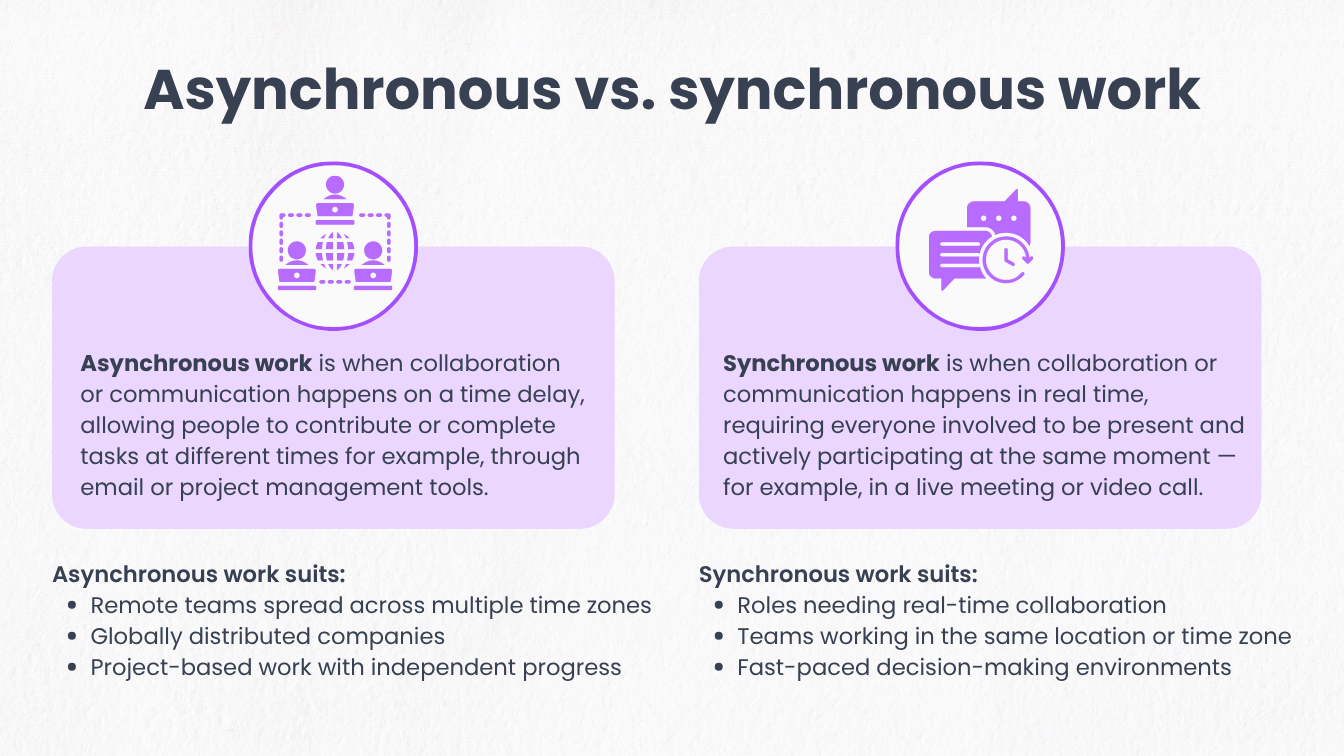
Asynchronous work refers to a workflow where team members do not need to be online or working simultaneously to collaborate effectively. Instead of relying on real-time meetings or immediate responses, communication and tasks happen on a flexible timeline.
This model contrasts with synchronous work, where activities occur in real-time—like live meetings, calls, or instant messaging.
Synchronous work suits teams needing constant real-time collaboration, while asynchronous work fits distributed teams across time zones.
For many years, most companies relied heavily on synchronous communication—meetings, calls, and real-time chats—to keep teams connected. More recently, asynchronous work has emerged as an alternative, especially as remote work has expanded.
Why asynchronous work is on the rise
Global teams, global time zones: Companies today often hire talent from different countries to tap into diverse skills and perspectives. With teammates scattered from Sydney to San Francisco, coordinating overlapping work hours can be impossible or inefficient. Asynchronous work breaks free from the constraints of time zones, allowing everyone to contribute when they're most productive.
Flexibility and work-life balance: Asynchronous work supports flexible schedules, helping employees work when they're most alert and focused. It also allows people to better manage important commitments—whether that's family time, childcare, exercise, or personal appointments—without sacrificing productivity. This flexibility often leads to better work-life balance, reduced burnout, and increased job satisfaction—all critical in retaining top talent.
Reduced meeting overload: Endless meetings are one of the biggest productivity drains in today's workplace. When teams span multiple time zones, scheduling becomes even more challenging, often forcing some members to join calls at inconvenient or even unreasonable hours. This not only disrupts focus but can also erode morale over time. By shifting communication into asynchronous channels, teams dramatically reduce the number of required meetings. Updates that once took an hour-long video call can now be shared through project management tools, recorded video messages, or detailed written updates. This approach allows each team member to consume information at a time that suits them, without sacrificing the quality of collaboration. The result? Fewer interruptions, more uninterrupted blocks of time for deep, focused work, and a culture that values productivity over simply being present in a virtual meeting room.
Thoughtful communication: One of the hidden advantages of asynchronous work is the quality of communication it fosters. When there's no pressure to respond immediately, people can take the time to think through their ideas and express themselves more clearly. This shift away from “instant replies” reduces the risk of rushed or unclear messages that lead to misunderstandings.
Better documentation: Asynchronous communication naturally creates a written trail of discussions, decisions, and project updates. Whether through task boards, shared documents, or team platforms, this documentation becomes a living knowledge base. Team members can easily refer back to past conversations, reducing repetitive questions and ensuring that no one is left out of the loop if they weren't available at the time. This kind of documented communication can also improve current workflows and help onboard new team members faster by giving them access to the full context of ongoing projects without relying solely on memory or repeated explanations.
How teams stay productive with asynchronous work
Transitioning to asynchronous work isn't just about changing when people respond to messages—it requires intentional strategies, clear processes, and the right tools to keep collaboration smooth and projects on track. Done well, it allows teams to thrive across time zones without the chaos of constant pings or late-night meetings. Here are key approaches successful teams use to stay productive in an asynchronous environment:
1. Clear communication protocols
The backbone of asynchronous work is clarity. Without shared working hours, teams need explicit agreements on how and where communication happens. Quick updates might go through chat apps like Slack or Microsoft Teams, while detailed discussions or brainstorming sessions are better suited to shared documents or project management platforms.
It's also important to define response time expectations—whether it's within 24 hours for routine questions or faster for urgent issues. Outlining priorities, decision-making processes, and how handovers should be handled ensures no one is left guessing. These boundaries not only prevent misunderstandings but also give employees the confidence to step away without worrying about missing something important.
2. Use of collaboration and project management tools
Without a shared office or constant check-ins, visibility becomes crucial. Digital collaboration tools allow teams to track tasks, monitor progress, and manage deadlines transparently. When everyone can see what's in progress, what's coming up, and what has been completed, it reduces bottlenecks and prevents duplicate work.
These tools act as a central hub for updates, resources, and accountability, eliminating the need to chase information and ensuring projects move forward smoothly—even when team members are working at different times of the day.
3. Overlapping “core hours” where possible
While asynchronous work minimizes the need for real-time interaction, having a small window of overlapping availability can be a game changer. Just a few hours of overlap allows for quick problem-solving sessions, urgent clarifications, or a touchpoint to strengthen team connection. These windows ensure that important conversations still happen without requiring full-day availability across time zones.
The key is balance: enough overlap to stay connected, but not so much that it undermines the flexibility that makes asynchronous work effective.
4. Written updates and video messages
Replacing some meetings with written updates or short video recordings helps preserve context and nuance while respecting everyone's schedules. A concise written report, or even a 5-minute video update, can replace a 45-minute call.
Video messages are particularly effective for sharing tone and enthusiasm, helping to build a sense of presence even when you can't meet live. Written updates, meanwhile, create a record that team members can revisit whenever needed, reducing misunderstandings and ensuring no one misses critical details.
5. Prioritize deep work and focus time
One of the biggest advantages of asynchronous work is the ability to carve out uninterrupted blocks of time for deep, focused work. Without the pressure of instant replies or back-to-back meetings, employees can dedicate uninterrupted blocks of time to their most important tasks, allowing them to focus deeply without constant distractions.
This leads to higher quality work and faster progress on complex projects. Encouraging team members to protect this focus time helps combat the “always-on” mentality and ensures that energy goes into meaningful results, not just constant communication.
6. Foster a culture of trust and autonomy
Ultimately, asynchronous work can only succeed if it's built on trust. Managers need to shift from measuring productivity by hours online to focusing on results delivered. Giving employees autonomy over how they structure their days empowers them to work in ways that maximize both productivity and well-being.
When people feel trusted, they can feel more engaged and motivated, which can lead to better performance and a stronger sense of ownership. This culture shift doesn't happen overnight, but once in place, it becomes the foundation of a thriving asynchronous team.
Challenges and how to overcome them
While asynchronous work offers numerous benefits, it's not without its hurdles. Without thoughtful systems in place, teams can risk losing momentum, connection, or clarity. The good news is that these challenges can be managed with intentional strategies. Here are some of the most common obstacles asynchronous teams face—and how to overcome them.
Challenge 1: Feeling disconnected
One of the biggest challenges with asynchronous work is the lack of face-to-face interaction. Without the daily rhythm of office conversations or quick check-ins, some employees may feel isolated, overlooked, or unsure if their contributions are valued. This sense of disconnection can gradually impact motivation and team cohesion.
How to overcome it:
Encourage virtual social gatherings such as casual coffee chats, online sessions, or informal Friday check-ins.
Use dedicated chat channels for non-work topics, allowing team members to share personal updates, photos, or small wins.
Celebrate milestones and successes publicly—whether it's completing a big project or recognizing individual achievements.
Make space for human connection, not just task updates, so team members feel part of a shared journey rather than working in silos.
Challenge 2: Delayed responses
When your teammates are scattered across time zones, waiting for replies can slow down decision-making and create frustration. Small blockers can quickly snowball into bigger delays if no clear plan exists for handling urgent questions or feedback.
How to overcome it:
Set expectations for response times—for example, routine questions answered within 24 hours and urgent matters flagged for faster turnaround.
Designate point people for certain projects or topics so that responsibilities are clear and no question goes unanswered.
Encourage proactive updates, where team members provide progress reports before being asked.
Use well-structured task handovers so others can continue work even if one person isn't online.
Challenge 3: Overcommunication and noise
Ironically, in trying to stay connected asynchronously, teams can sometimes go overboard. Too many updates can leave employees overwhelmed and unsure what truly matters. Instead of improving clarity, this creates noise that hinders focus.
How to overcome it:
Keep communication concise and purposeful—quality over quantity.
Use threaded discussions or clearly labeled topics to keep conversations organized.
Encourage a “one source of truth” approach, where key decisions and documents are stored in an accessible, centralized location.
Teach teams to distinguish between urgent, important, and nice-to-know messages to prevent alert fatigue.
While asynchronous work may not suit every type of business and does come with its challenges, it can work exceptionally well for the right companies—and with the right processes in place, it often leads to stronger collaboration, greater flexibility, and higher productivity.
Final thoughts
The rise of asynchronous work marks a significant shift in how teams collaborate in the modern era. By breaking free from the limitations of synchronous schedules, companies can tap into global talent, foster flexibility, and create environments where deep, focused work thrives.
However, success requires thoughtful communication protocols, the right tools, and a culture built on trust and autonomy. With these elements in place, working across time zones becomes less of a hurdle and more of an opportunity.
More from the blog
Find your flow, take your productivity to the next level.
In recent years, remote and hybrid work have surged in popularity, offering flexibility and personalizing workspaces. However, blurred boundaries between work and personal life can present challenges. Don’t worry—we’ve got ten practical tips to help you stay productive and balanced while working from home!
Sustainability’s growing urgency is reshaping how we work, making green productivity—efficient work with less environmental impact—essential. This blog looks at how the productivity industry is adapting and why it matters.
Productivity apps are everywhere helping us map out our days, streamline projects, and stay on top of our to-do lists. But there is a catch: as digital tools become more powerful, they often know far too much about us.
|
6 min
Find your flow. Start using Time Stream today.
The only productivity app that protects your time and privacy. Focus better, accomplish more.